
The year is two thousand twenty twenty-one, and something’s not right.
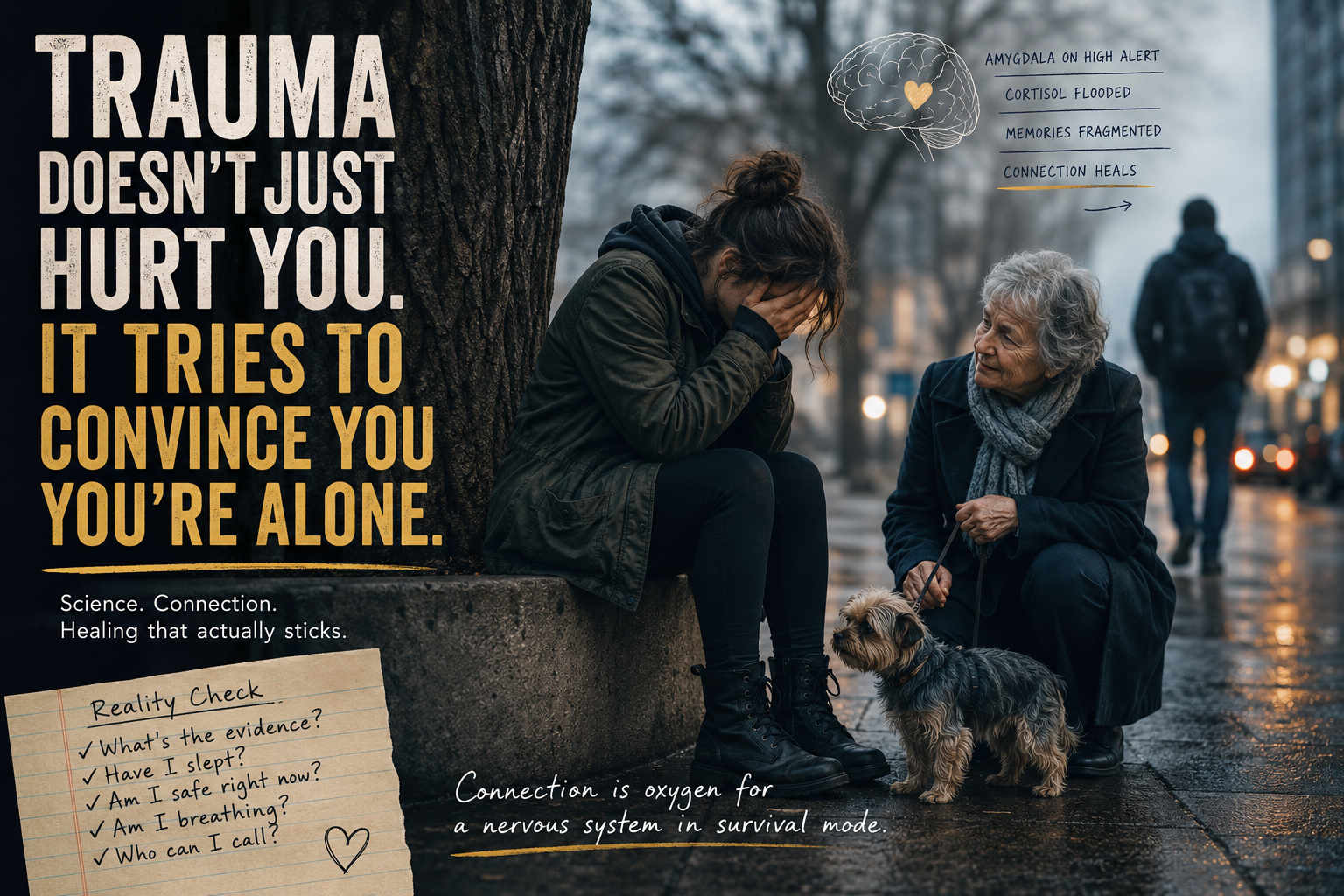
Chelsea’s psychologist said something to her a few weeks before everything started feeling unreal: “It’s not right that you’re beginning to regret things that haven’t happened yet.” Chelsea laughed when she heard it, not because it was funny but because humor had become one of the last exits before panic. Some people cry when life corners them. Some people get angry. Chelsea laughed and made jokes because the alternative often felt like stepping off a cliff.
She was twenty-three years old and already tired in places sleep could not touch. Her eyes looked four times older than her chronological age. Three months earlier she had lost her driver’s license after a DUI where she only blew a 0.06. Sitting in a stale office that smelled of coffee and old paper, she remembered her court-appointed attorney looking at her across his desk and saying, “It’s not the amount. It’s your behavior.”
Behavior.
Funny word.
We speak about behavior as if it arrives detached from history. As if it exists in isolation from trauma, fear, addiction, loneliness, and nervous systems that have been running with the check-engine light on for years. People tend to judge the smoke and ignore the fire underneath it.
Chelsea had not started drinking or using because life felt too good. Most people don’t. People use because they want relief. They want quiet. They want ten minutes where the artillery fire inside their own heads agrees to a ceasefire. Addiction often enters the story pretending to be medicine before eventually revealing itself as another wound.
That morning she was taking the bus to work because she no longer had the privilege of driving. The ride itself felt ordinary enough. People stared into phones, looked out windows, and moved through the quiet rhythm of strangers temporarily sharing space. Then a man started talking to her.
“What’s the matter, beautiful?”
Chelsea looked away.
“I saw you looking at me. We connected.”
She pulled her jacket tighter and tried to make herself smaller.
“Just give me your digits.”
She declined politely because women learn early that politeness often feels safer than confrontation.
“No thank you.”
That should have been enough. It wasn’t.
He kept pushing, and Chelsea could feel something changing inside her before she could even think about it. Her breathing became shallow. Her heart rate climbed. Her muscles tightened. There are moments when the body begins reacting before the conscious mind catches up, and trauma survivors know those moments well. Trauma does not ask permission before waking up.
People often think trauma is simply memory, as if painful experiences are photographs tucked into dusty boxes somewhere in the back of the mind. But trauma does not remain politely stored in the past. Trauma becomes biology. It moves into the nervous system and starts rearranging furniture.
Deep inside the brain are structures involved in detecting danger, organizing memories, and regulating emotion. Under ordinary circumstances these systems work beautifully. Human beings survived because our ancestors were good at noticing threats. A sound in the bushes could have been wind, or it could have been something with teeth. Better wrong than dead.
But repeated stress and trauma can change sensitivity. Research suggests that chronic adversity and traumatic experiences can alter communication among systems involved in fear, emotional regulation, and memory. The smoke detector starts becoming too sensitive. Eventually a loud garbage truck triggers it. Steam from the shower triggers it. Dust triggers it. Over time a person can begin feeling less like they live in a house and more like they live inside an alarm system.
That alarm system inside us gets skewed. Like the old apartment fire alarm that goes off when toast is burnt in Nebraska.
Chelsea had spent years living inside such a system.
She got off the bus early and started walking. Behind her she heard footsteps keeping pace. She walked faster. The footsteps remained. Fear does strange things to time. Seconds stretch and thoughts multiply. The brain starts running simulations at impossible speeds.
Don’t panic.
Keep moving.
Don’t run.
Run.
By the time she reached a concrete planter surrounding an old poplar tree, she was emotionally and physically exhausted. She sat down hard and began to cry. Not dramatic movie crying. Just collapse. The kind that comes when a person has spent too long carrying too much.
Then she heard a voice asking, “What’s the matter, little thing?”
Chelsea looked up and saw an older woman with soft gray hair holding the leash of a tiny Yorkie.
“Make him stop,” Chelsea whispered.
The woman frowned. “Who’s that, dear?”
Chelsea looked back.
The sidewalk behind her was nearly empty.
No man.
No footsteps.
Just a woman and her dog.
She was 50 yards from the entrance to her home.
Twenty minutes later she sat inside her loft staring at her phone. Her hands shook as she tried calling her sponsor. A familiar male voice answered.
“Chelsea? Hey.”
“John?”
There was a pause.
“I don’t know how to say this, but Louise passed away a few hours ago.”
Chelsea closed her eyes. Louise had been her Rock of Gibraltar, one of those people who felt permanent. Then words came out before Chelsea could stop them.
“I don’t know what’s real anymore.”
John was quiet for a few moments. Some people rush toward pain because silence makes them uncomfortable. John seemed to understand that silence sometimes gives grief room to breathe.
Finally he said, “Trauma’s cruelest trick isn’t the pain. It’s the isolation.”
I think he was right.
Trauma isolates people long before they physically disappear. First they stop trusting others. Then they stop trusting themselves. Eventually they stop asking for help altogether. Fear starts writing rules for living. It tells people to hide, to stay small, and to handle everything alone.
Fear is a terrible life coach.
Science keeps pointing toward something interesting. People often assume healing comes from finding the perfect technique or the right collection of tools. CBT matters. EMDR matters. Somatic therapies matter. But attachment research, interpersonal neurobiology, and studies of social support suggest something deeper is happening underneath those approaches.
Louis Cozolino has described the brain as a social organ shaped by relationships. We all have a brain. That mysterious clump of cells. But our mind is shaped by connections with others. In isolation the brain is but a clump of cells.
Safe connections appear to regulate stress systems, lower cortisol, improve emotional regulation, and help integrate painful experiences. Nervous systems communicate with each other constantly, often without us realizing it. A parent calming a child, a friend sitting beside someone after loss, a sponsor answering the phone, or someone simply saying I’m here can influence the body in measurable ways.
Research repeatedly finds that the quality of connection itself often predicts outcomes better than any single treatment modality alone. Not because techniques are unimportant, but because techniques work better when the nervous system feels safe enough to use them. You can hand a drowning person a buoy, but first they need to stop swallowing water.
CBT teaches another lesson worth remembering: thoughts are not verdicts. A thought says, They’re watching me. A thought says, I’m broken. Recovery asks questions instead. What’s the evidence? Have I felt this before? Am I exhausted? Am I afraid?
Distance matters. Sometimes six inches of distance between a thought and reality can save a life.
That night Chelsea thought about the older woman with the Yorkie, Louise, John, meetings, phone calls, and people who stayed. For years she had thought healing meant climbing out of darkness by herself. Maybe she had it backward.
Maybe connection isn’t some soft thing people stitch onto pillows.
Maybe it’s oxygen.
Connection is one of the most powerful antidotes to trauma. Trauma often leaves us feeling isolated, unsafe, and disconnected from others and even ourselves. Safe, consistent relationships help rebuild trust, regulate our nervous system, and remind our body that it’s not alone anymore. That relational safety is what allows the deeper healing work to actually stick.